
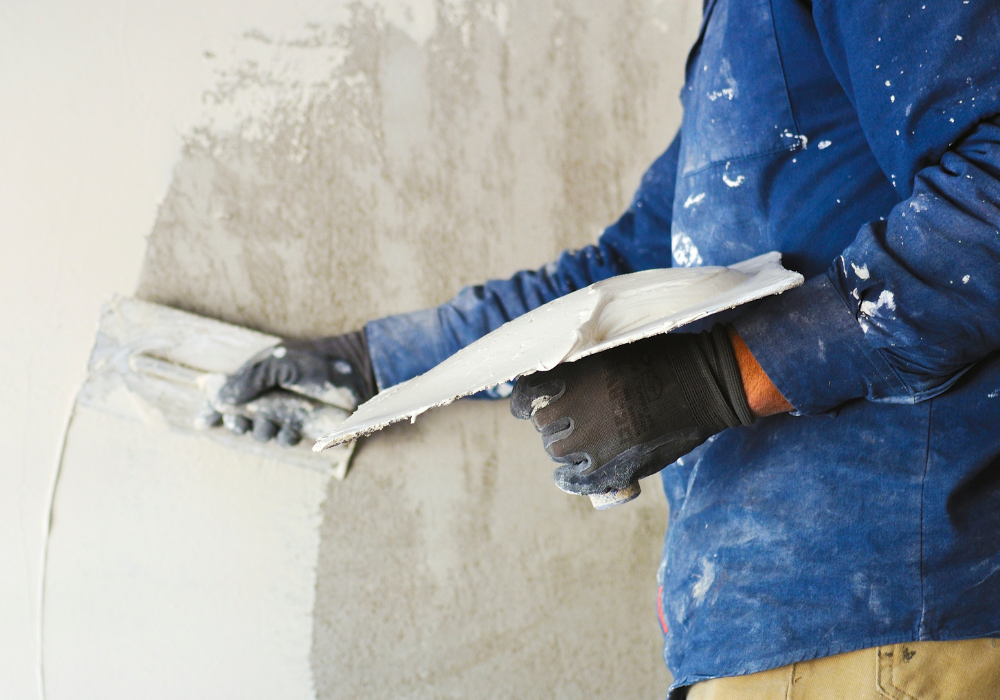
Plaster can be applied to many existing surfaces, but there are general rules to what can be plastered over and, perhaps more importantly, the best ways to prepare them.
At Corinium Plastering we work on many different properties throughout Cirencester and the wider Cotswolds, so we see pretty much everything. Older homes will have original plasterwork and walls built using traditional materials, whilst newer builds tend to use modern substrates. Each of these surfaces has different properties and it’s important to understand them when applying a new layer of plaster.
In this guide, we’ll explain everything about what surfaces you can plaster over.
Can you Plaster Over Wallpaper?
Plastering over wallpaper is possible, however it’s not recommended by professionals. It’s common for people to attempt to plaster over wallpaper, often when the wallpaper has already been painted over or is firmly stuck to the wall. However, wallpaper is not designed to have plaster applied over the top of it and rarely works well.
Wallpaper is attached to the wall using adhesive, which can be broken down when you apply plaster. Fresh plaster has a high moisture content which can cause wallpaper to lift, form bubbles or come away from the wall completely. Any failures may not show until the plaster dries and the wallpaper shrinks.
Another problem is that wallpaper prevents plaster from bonding correctly to the wall. This can lead to cracks forming, hollow patches in the plaster or even delamination.
If you want a finish that will last, wallpaper should be removed before plastering. It allows the wall to be inspected underneath and repaired if needed. Once the wall is clean and solid, it can be sealed and skimmed to a perfect finish.
Can you Plaster Over Artex?
Artex was commonly used on ceilings and walls up until 2000. Due to its textured finish, many people choose to plaster over Artex to create a smooth, modern finish.
Plastering over Artex is possible, but there are some things to look out for. As Artex wasn’t typically used on properties built after 2000, it more than likely will contain asbestos, which is extremely toxic and can cause serious health issues if tampered with. Artex containing asbestos should never be sanded, scraped or broken away. Plastering over the surface is one of the safest ways to deal with the asbestos.
Before applying plaster, it’s important to make sure the Artex is safe. Any loose or flaking areas will need to be removed, ensuring it has been tested for asbestos. Depending on the texture, you may need to knock back some of the high points so they aren’t showing through the plaster, this prevents shadowing, ensuring an even skim coat.
Once this is done, the surface will be sealed using a PVA bonding agent. This helps to control suction and ensure good adhesion between the plaster and the wall. Depending on the depth of the texture, one or two coats of plaster may be needed. One coat is usually sufficient to cover the pattern, but very deep textures may require two skims to get a perfectly flat finish.
Can you Plaster Over Painted Walls?
Providing the paintwork is in good condition, painted walls can be plastered over. As with wallpaper, it isn’t the paint you need to worry about, it’s what’s underneath the paint that could cause problems.
Peeling paint will need to be scraped away before plastering. If paint is flaking or coming away from the wall, any new plaster will lift with it. Painted surfaces can also become chalky over time or lift at the edges, both of which will cause issues with new plaster.
When surfaces are painted, it can affect how plaster adheres to the wall. Gloss paint finishes and sealed surfaces will need to be prepared by lightly sanding and cleaning. This creates a key for the plaster to grip and removes any contaminants.
A PVA bonding agent is applied to control suction, before plastering can begin. When painted surfaces are prepared properly, plastering over them is perfectly acceptable.
Can you Plaster Over Plasterboard?
Plasterboard (drywall) is actually one of the best surfaces to plaster over. It’s specifically designed to accept plaster, providing a smooth surface that ensures a high-quality finish. It’s made up of dried gypsum plaster that is between two layers of paper.
Joints should always be prepared correctly before plastering. Tape the joins with scrim tape to prevent cracking where the boards meet. Screws and fixings should be checked to make sure the boards aren’t moving, as this will lead to cracks.
When installed correctly, plasterboard provides an excellent surface for plastering. Skimming plasterboard is very common on new builds, extensions and loft conversions. If fitted properly, plasterboard will give you a great finish that will last for many years.
If plastering over old plasterboard, it will be of benefit to add a layer of PVA first. It’s best to find out the age of the plasterboard before you start the process.
Can you Plaster Over Tiles?
Plaster can be applied over tiles, although we don’t generally recommend it. Tiles are very smooth, so the plaster struggles to attach to the surface. Provided tiles are clean, firmly fixed and prepared correctly, plaster can be applied using specialist bonding agents.
However, there is a problem with plastering over tiles. If they were not fitted perfectly and begin to come loose, your new plaster will fall away with them. Also, another issue with plastering over tiles is that it makes it difficult to drill into surfaces. Drilling into plaster that is covering tiles could cause the tiles underneath to crack, weakening the hold they might have on appliances, such as kitchen or bathroom sinks.
In most cases, tiles will need to either be removed or covered over with plasterboard. Removing tiles can be time consuming, but will create a much more stable surface than plastering over them. Covering them over with plasterboard achieves the same result and allows you to skim properly.
Can you Plaster Over Bricks?
Yes, you can plaster over bricks so long as they are in good conditioning and there are no signs of crumbling or damage, and like tiled walls they require some preparation if you do plan to plaster over them. The surface of brick walls are very uneven and highly absorbent. This causes plaster to dry too quickly, leading to cracking.
Brick walls will usually be cleaned, and sometimes dampened down before plastering. To avoid rapid drying, a bonding coat or render base will be applied to even out the surface.
Brick walls can also be covered over with plasterboard. This approach can be faster than plastering directly to brick and results in a more consistent finish. Either way, you can plaster over brick providing it’s done correctly.
Can you Plaster Over Breeze Blocks or Block work?
Yes, you can plaster over breeze blocks or block work walls, but like normal brick walls, you must first ensure there are no signs of crumbling or damage as this will prevent your plaster from sticking and drying as it should. Modern properties and extensions will often have block walls which are porous and uneven.
To plaster directly onto block work, you’ll need to seal the surface or dampen it down. This prevents the plaster drying too quickly. Rather than a standard skim, block walls are usually given a bonding coat or render base first.
As with brick walls, you can also plasterboard over block work before applying plaster. This provides a very even surface and can be quicker than rendering and skimming.
Can you Plaster Over Wood?
Applying plaster directly onto wood is definitely not recommended, and should be avoided if possible. . As the weather changes, wood will move by expanding and contracting. Movement like this will cause cracks to appear in your plaster.
If plaster needs to be applied over timber, you must install a suitable backing first. This is usually done using plasterboard or metal lath that is securely fixed to the wood. Once this is in place, it can be skimmed like any other surface.
If you’re working with wooden panels, it’s possible to push the plaster in between the panels, creating a hook of plaster behind the panel. This is possible and will work if done correctly, but again is definitely not recommended and should be avoided if possible.
Can you Plaster Over Existing Plaster?
Plastering over existing plaster is very common, but the condition of the original plaster is critical. God condition plaster that is firmly bonded to the wall can usually be skimmed over successfully.
Provided the plaster is clear of cracks, hollow areas, or signs of damp, it can be skimmed. Any cracks or hollow areas should be inspected and repaired where necessary. Plaster that is blown or not firmly attached to the wall must be removed, as it will lift with any new plaster.
Once the existing plaster has been prepared, we apply a PVA bonding agent to control suction. Then we apply a new skim coat to give the wall a fresh look.
Just remember that failure to fill all the holes and cracks can result in an uneven finish to your new plaster, leading to further issues in the future.
Can you Plaster Over Concrete?
Providing it’s in good condition, concrete walls can be plastered. Smooth concrete surfaces don’t provide much of a mechanical key for plaster. Very absorbent concrete can also dry plaster out too quickly.
Concrete walls will always be cleaned thoroughly before plastering. We apply a bonding agent, followed by a bonding plaster or render base. Once the base has gone off, we can apply a finishing skim to produce a high-quality finish.
Can you Plaster Over Old/Crumbling Walls?
Similar to the point above, walls should always be in good condition before plastering. Due to age and other factors, some walls can become crumbly or unstable. These walls should never be plastered over.
Ignoring problems like these will cause headaches further down the line when your new plaster starts to fail. Please get in touch if you suspect your walls are unstable and need some professional advice.
FAQs
Can paint be applied to plaster straight away?
No, you should always allow plaster to fully dry before applying paint. When painting over plaster for the first time, we recommend using a mist coat.
Does plaster need ventilation to dry?
Ventilation will help plaster to dry quicker, although it’s not always necessary. Depending on the thickness of the plaster and the ambient temperature, it can take anything from 3 to 7 days to dry.
How long does plaster take to dry?
A full plaster job can take anything up to 6 weeks to completely dry out. The general rule of thumb that most professionals tend to go by is to wait at least a week before decorating a freshly plastered wall. There are various factors that can affect how fast your plaster dries, these can be outside factors such as the weather, how much airflow there is through the property or even your heating usage?
Try to keep your windows open to allow a consistent airflow through your property, this will help the drying process naturally. Avoid using your central heating for the first 48 hours as drying the plaster too quickly can cause cracking.
How do I prepare a surface for plaster?
Clean walls before plastering by removing all wallpaper, dust, grease, and loose materials, ensuring a solid, dry surface for maximum adhesion. Use a steamer or sugar soap to remove wallpaper, scrape off loose debris, and apply a 1:1 PVA water mixture to control suction on, for instance, solid or porous walls
Need a Professional Plasterer in Cirencester or the Cotswolds?
Understanding what surfaces can be plastered over is only half of the battle. Knowing how to prepare different surfaces is crucial to getting a professional finish.
That’s where Corinium Plastering comes in. We have years of experience working on properties in and around Cirencester and offer trade level craftsmanship on every project.
If you have plastering requirements, contact us today for expert advice and a free quote.